
Not all commission structures pay the same way, even at the same headline percentage. Tiered plans, draws against commission, and base-plus-commission setups all calculate differently, and understanding the math behind your specific structure can change how you approach hitting targets. Here’s how the most common structure actually works.
Common Commission Structure Types
- Flat rate commission — a single percentage applied to all sales, the simplest structure to calculate
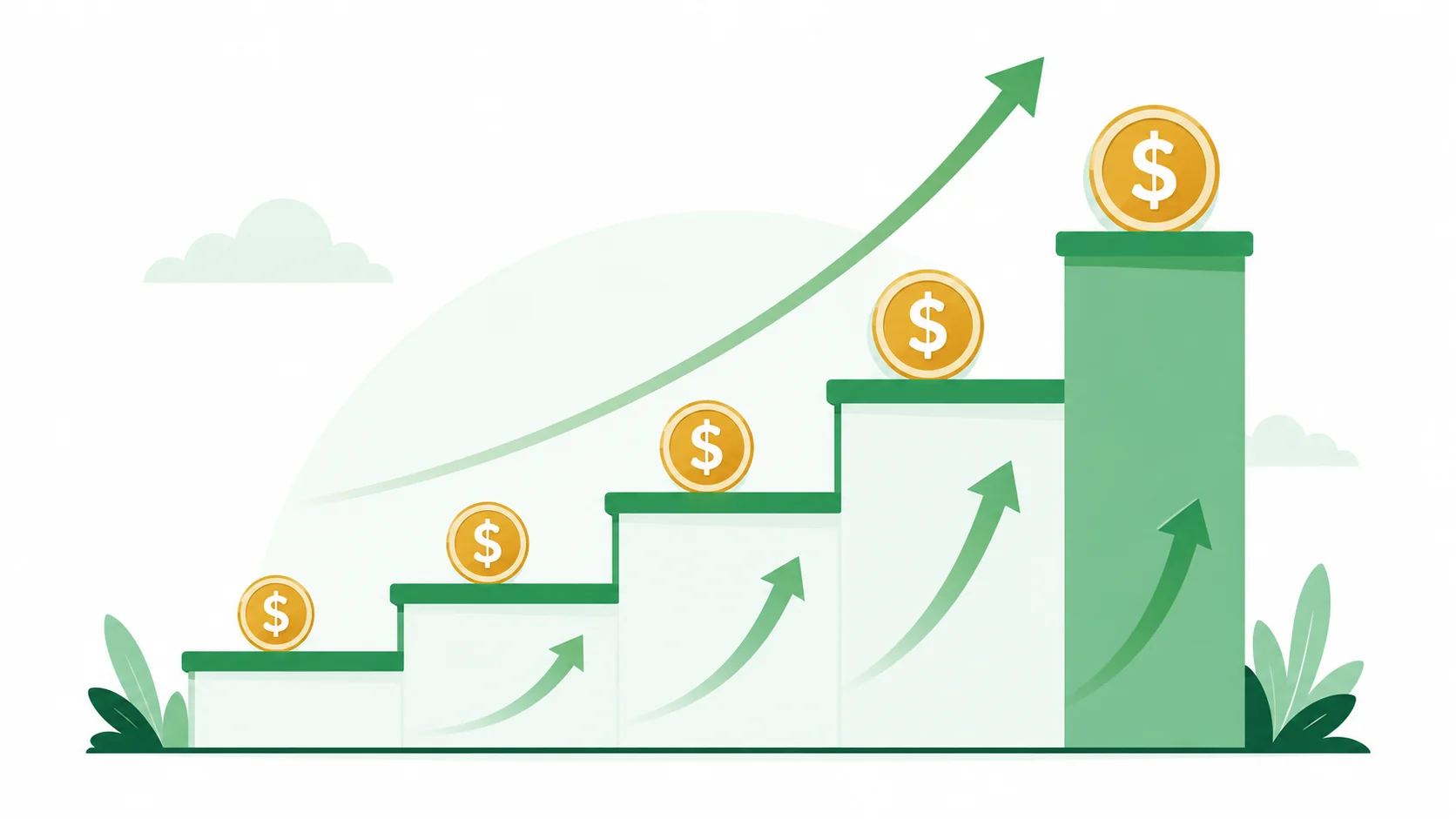
- Tiered commission — the percentage increases as sales volume crosses certain thresholds, rewarding higher performance with a higher rate
- Draw against commission — a guaranteed advance paid regardless of sales, later reconciled against actual commissions earned
- Base plus commission — a fixed salary combined with commission on top, reducing income volatility compared to pure commission
Real Example: Tiered Commission Structure
Let’s calculate a common tiered setup.
Commission tiers:
- 0 to $50,000 in sales: 5%
- $50,001 to $100,000 in sales: 7%
- Above $100,000 in sales: 10%
Salesperson’s monthly sales: $120,000
Tier 1 (first $50,000): $50,000 × 5% = $2,500
Tier 2 (next $50,000, from $50,001 to $100,000): $50,000 × 7% = $3,500
Tier 3 (remaining $20,000, from $100,001 to $120,000): $20,000 × 10% = $2,000
Total commission: $2,500 + $3,500 + $2,000 = $8,000
Why Tiered Structures Matter for Motivation
Notice that the salesperson didn’t earn 10% on the full $120,000. They earned a blended rate across each tier, working out to an effective rate of about 6.67% overall ($8,000 ÷ $120,000). Tiered structures are specifically designed to reward crossing thresholds, since the marginal commission on sales beyond $100,000 is meaningfully higher than on earlier sales, creating a real incentive to push past that final tier rather than coasting once minimum targets are hit. SHRM’s guide to sales compensation design covers why employers structure plans this way.
Base Plus Commission vs Pure Commission
- Pure commission roles offer higher earning potential but more income volatility, since a slow month can mean minimal or no pay
- Base plus commission roles provide income stability through the base salary, with commission as an incentive layer on top, generally resulting in lower peak earning potential but reduced financial risk
Neither structure is universally better. It depends on personal risk tolerance, savings cushion, and confidence in consistent sales performance. Glassdoor’s analysis of sales compensation models shows meaningful earning differences between these structures across industries.
Calculating Your Effective Hourly Rate
Commission earnings can be converted to an effective hourly rate for comparison against other job options. If the salesperson above worked 45 hours that week to earn a portion of that $8,000 commission (say $2,000 of it, spread across one week), the effective hourly rate would be:
$2,000 ÷ 45 hours = ~$44.44/hour
This calculation helps sales professionals evaluate whether a demanding, high-effort period is actually translating into strong effective pay, or whether the hours invested outpace the commission earned.

Draw Against Commission Explained
A draw is essentially an advance against future commission, common for new salespeople still building a pipeline. If you receive a $3,000 monthly draw but only earn $2,200 in actual commission that month, the $800 shortfall typically carries forward, reducing future draws or commission payouts until it’s recovered. Investopedia’s explanation of draw against commission covers how this arrangement protects both employer and employee during ramp-up periods.
Common Commission Calculation Mistakes
- Assuming the top tier rate applies to all sales, rather than understanding tiered structures apply each rate only to sales within that specific bracket
- Not accounting for draw repayment when estimating take-home pay in early months
- Confusing gross commission with net pay, since taxes and any deductions still apply to commission income just like regular wages
Calculate your exact commission earnings. Use the Commission Calculator →
Frequently Asked Questions
How do you calculate tiered commission?
Apply each tier’s specific rate only to the portion of sales that falls within that tier’s range, then add the results together. Sales above the top threshold get the highest rate, but only for that portion, not the entire sales total.
What is a draw against commission?
A draw is a guaranteed advance payment made regardless of actual sales performance, later reconciled against commission actually earned. If commission earned is less than the draw, the shortfall typically carries forward to be recovered in future periods.
Is base plus commission better than pure commission?
It depends on personal risk tolerance and financial situation. Base plus commission offers more income stability, while pure commission typically offers higher peak earning potential but with significantly more month-to-month income volatility.
How is commission income taxed?
Commission income is generally taxed the same as regular wages, though employers sometimes withhold at a higher flat supplemental rate initially, which gets reconciled against your actual tax liability when you file your return.
What is a typical commission rate for sales?
It varies enormously by industry, from 1–3% in some high-volume, low-margin industries to 20% or higher in specialized, high-margin sales roles, so there’s no single universal benchmark rate.
How do you calculate your effective hourly rate from commission?
Divide your total commission earned for a specific period by the total hours worked during that same period. This gives a comparable hourly figure useful for evaluating whether commission-based work is paying competitively against hourly or salaried alternatives.