
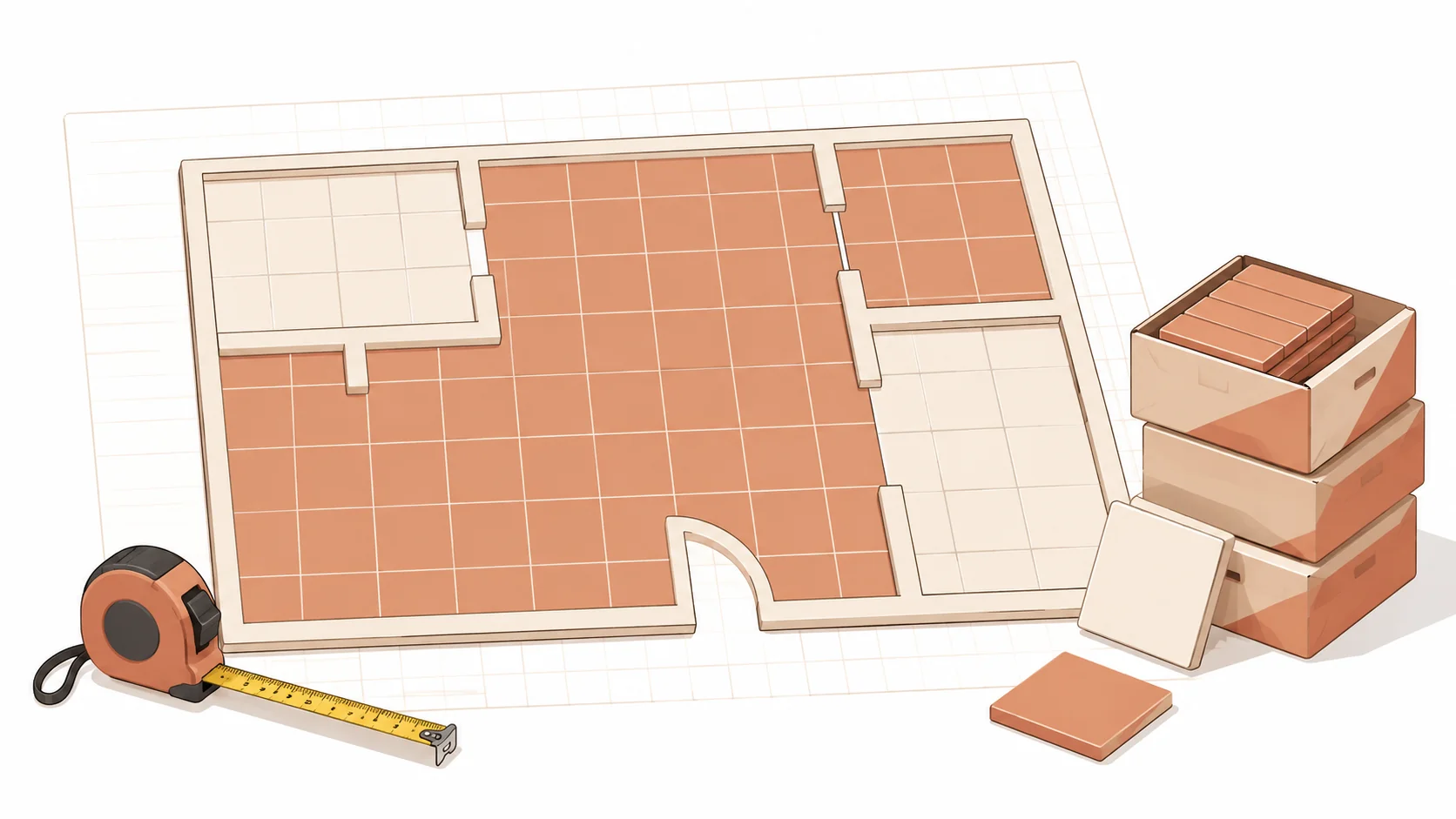
Under-ordering tile means a frustrating mid-project store run, sometimes for a dye lot that no longer matches. Over-ordering wastes money on boxes that sit in the garage. Here’s how to land on the right number, including the waste factor most people forget.
The Basic Tile Formula
Tiles Needed = Floor Area (sq ft) ÷ Tile Area (sq ft) × (1 + Waste Factor)
Real Example: 12ft × 10ft Room, 12in × 12in Tiles
Let’s calculate a full example.
- Room area: 12 × 10 = 120 sq ft
- Tile size: 12in × 12in = 1 sq ft per tile
Tiles needed before waste: 120 sq ft ÷ 1 sq ft = 120 tiles
Adding the Waste Factor
Never order the exact calculated number. Cuts around edges, corners, and fixtures always create some waste, and having extra on hand for future repairs matters too.
Straight layout (10% waste factor): 120 × 1.10 = 132 tiles
Diagonal layout (15% waste factor): 120 × 1.15 = 138 tiles
Diagonal layouts require significantly more cutting at the room’s edges, which is exactly why they carry a higher standard waste allowance than a simple straight, grid-aligned layout. The Tile Council of North America’s installation guidelines cover these waste factor recommendations across different layout patterns in more detail.
Converting Tiles to Boxes
Tiles are sold by the box, not individually, so the final step converts your tile count into a purchase quantity.
If tiles come 6 per box:
- Straight layout: 132 ÷ 6 = 22 boxes
- Diagonal layout: 138 ÷ 6 = 23 boxes (rounding up, since partial boxes still need to be purchased in full)
Always round up to the next full box. Buying a fraction of a box isn’t an option at most retailers, and rounding down risks coming up short mid-installation.
Why Grout Lines Matter (Slightly)
Grout lines take up a small amount of space between tiles, technically reducing the exact coverage per tile compared to the tile’s nominal size alone. For standard residential tile with typical 1/8 to 3/16 inch grout lines, this effect is small enough that most calculators, including this one, don’t need to adjust for it separately, since the standard waste factor already provides more than enough buffer to absorb this minor difference.
Layout Pattern Affects More Than Just Waste
Beyond the waste percentage, layout pattern also affects labor time and visual complexity:
- Straight/grid layout — fastest to install, most efficient material use, classic clean look
- Diagonal layout — visually distinctive, can make small rooms feel larger, but requires more cuts and skill
- Herringbone or basket weave — highest visual impact, but typically carries an even higher waste factor (15–20%) and significantly more installation time
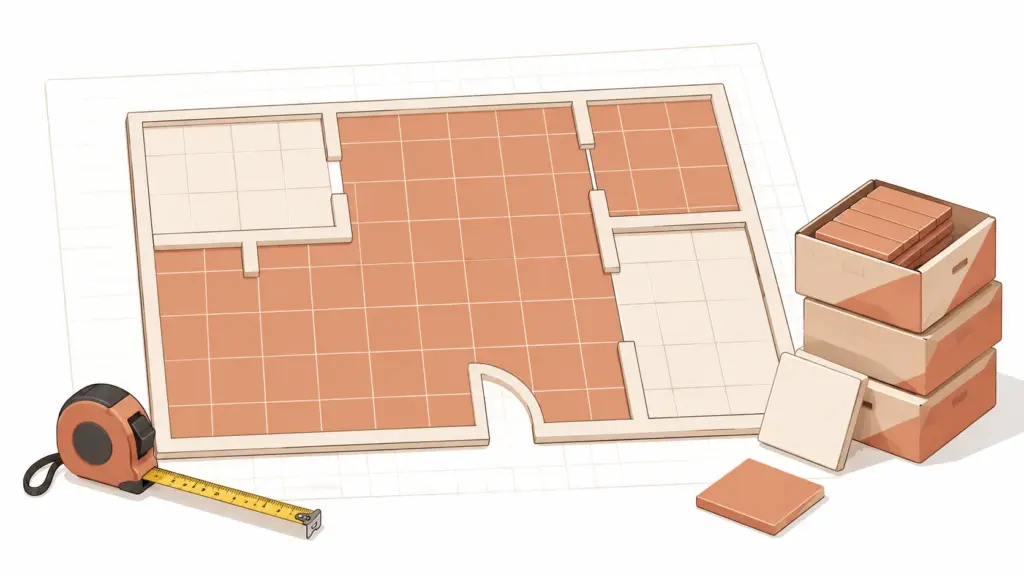
This Old House’s tile layout guide walks through the labor and material trade-offs between these common patterns.
Common Tile Calculation Mistakes
- Forgetting the waste factor entirely, leading to a frustrating shortage partway through installation
- Not accounting for pattern complexity, since a herringbone layout needs meaningfully more extra tile than a straight layout
- Measuring only the main floor area, forgetting alcoves, closets, or irregular room extensions that add to the total square footage
- Buying tile without confirming the dye lot matches, which matters if a shortage requires a second purchase later
Calculate exactly how many tiles and boxes you need. Use the Tile Calculator →
Frequently Asked Questions
How many tiles do I need for a 100 sq ft room?
For a 100 sq ft room using 12×12 inch tiles (1 sq ft each), you’d need 100 tiles before waste, or approximately 110 tiles after adding a standard 10% waste factor for a straight layout.
What waste factor should I use for tile?
A 10% waste factor is standard for straight, grid-aligned layouts. Diagonal layouts typically need 15%, while more complex patterns like herringbone can require 15–20% extra due to increased cutting.
How do I calculate tile boxes needed?
Divide your total tiles needed (including waste factor) by the number of tiles per box listed on the product packaging, then always round up to the next full box, since partial boxes generally aren’t sold.
Does grout line width affect how many tiles I need?
Only minimally for standard grout line widths (1/8 to 3/16 inch), and this small effect is already covered by the standard waste factor, so most calculations don’t need a separate adjustment for grout spacing.
How much extra tile should I keep after installation?
Keeping at least one unopened box of leftover tile is a common recommendation, since it allows for future repairs using matching material from the same dye lot, which can be difficult to source later.
Why does diagonal tile layout need more material?
Diagonal layouts require tiles to be cut at an angle along every wall edge, creating more waste per cut and more total cuts overall compared to a straight layout, which is why the standard waste factor is higher for diagonal installations.