
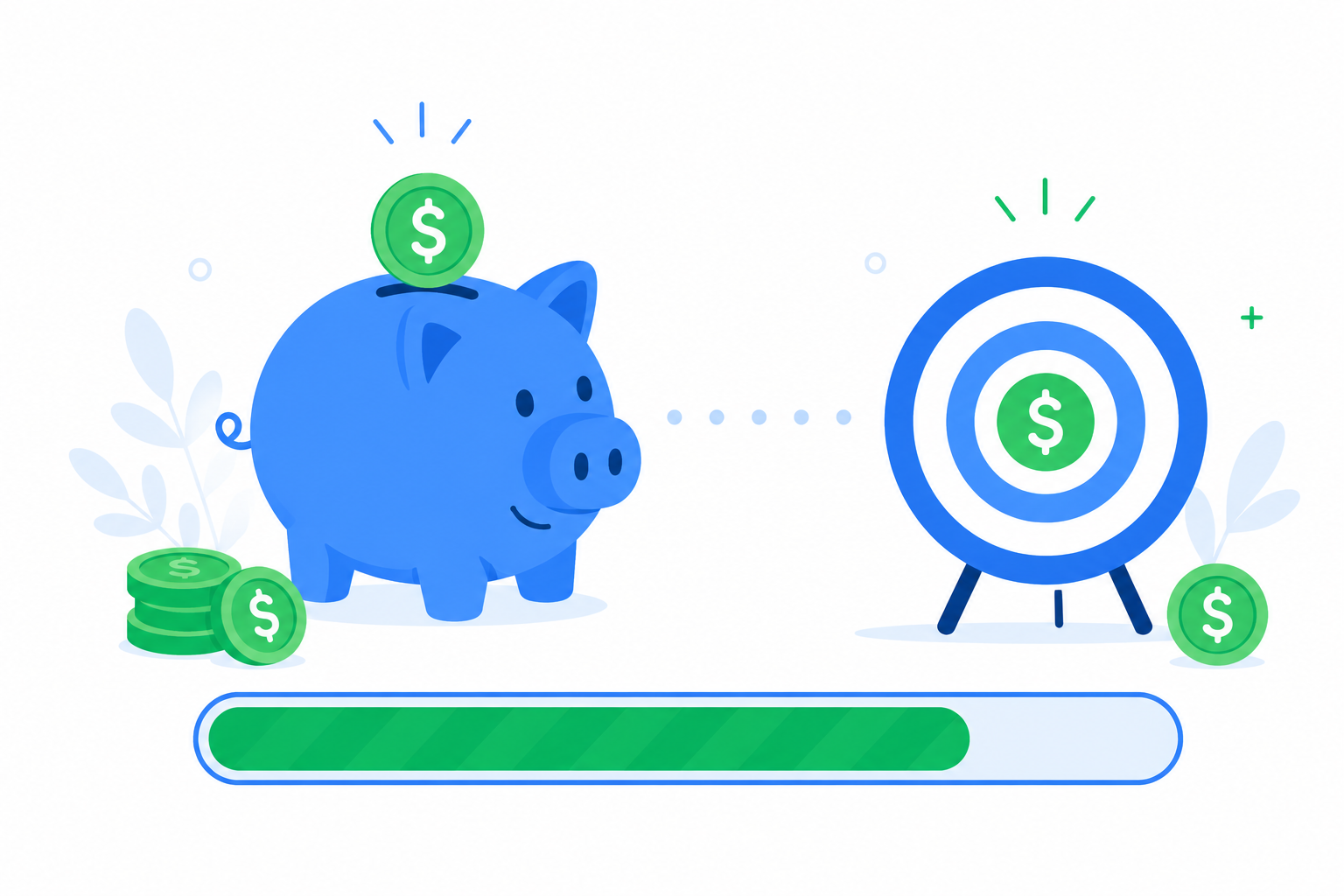
Vague savings goals rarely get accomplished — “I should save more” has no finish line, so it’s easy to keep postponing. A concrete number and a concrete timeline change that completely. Here’s exactly how long it takes to save $20,000 at a few realistic contribution levels, and how to shorten that timeline.
How a Savings Calculator Works
A savings calculator projects how a starting balance plus regular contributions grows over time at a given interest rate — the same compounding principle behind investment growth, just typically at more conservative, guaranteed rates through savings accounts and CDs rather than market-based returns.
Time to Save $20,000 — 3 Real Scenarios
Starting from $0, here’s how long it takes to reach $20,000 at three different monthly contribution and high-yield savings account (HYSA) rate combinations:
Scenario A: $300/month at 3.5% APY → Reaches $20,000 in approximately 61 months (about 5.1 years)
Scenario B: $500/month at 4.5% APY → Reaches $20,000 in approximately 37 months (about 3.1 years)
Scenario C: $800/month at 5% APY → Reaches $20,000 in approximately 24 months (2 years)
The gap between scenarios A and C — nearly 3 years — comes from both a higher monthly contribution and a better rate, showing how both levers matter, not just one.
The Best High-Yield Savings Accounts in 2026
Rates shift regularly, so it’s worth checking current offers rather than assuming last year’s numbers still apply. Bankrate’s best HYSA roundup and Investopedia’s rankings are both updated regularly and are good starting points before opening a new account. Look beyond just the headline rate — also check for monthly fees, minimum balance requirements, and how easily you can transfer money out when needed.
Savings vs. Investing — When Is Each Appropriate?
- Savings accounts — best for money you’ll need within the next 1–3 years: emergency funds, a house down payment, upcoming known expenses. Principal is protected (FDIC-insured up to limits), and returns are modest but guaranteed.
- Investing — best for money you won’t need for 5+ years, since markets fluctuate short-term but have historically trended upward over longer horizons. Retirement savings, in particular, almost always belong in investment accounts rather than savings accounts.
Using savings accounts for long-term goals, or investing money you’ll need next year, are two of the most common — and most costly — mismatches people make.
6 Ways to Save More Without Feeling Deprived
- Automate transfers the day you get paid, before you have a chance to spend it
- Negotiate recurring bills (insurance, subscriptions, phone plans) annually
- Use a separate account for savings so it’s out of sight from everyday spending
- Round up purchases into savings through many banking apps’ built-in features
- Redirect windfalls (tax refunds, bonuses) directly to savings instead of your checking account
- Set a specific goal and deadline, since abstract goals are far easier to abandon than concrete ones
Automating Your Savings: The One Habit That Works
Of everything on this list, automation consistently outperforms willpower. Setting up an automatic transfer the day your paycheck lands removes the decision entirely — you’re not choosing to save each month, you’ve simply already saved by the time you’d notice the money was “available” to spend.
Set your savings goal and see your exact timeline. Use the Savings Calculator →
Frequently Asked Questions
How much savings should I have at 30?
Common benchmarks suggest having roughly 1x your annual salary saved by 30 across all accounts (including retirement), though your specific emergency fund and short-term savings targets depend on your expenses and financial goals.
What is a HYSA and is it worth it?
A high-yield savings account (HYSA) offers a significantly higher interest rate than a traditional savings account, often several times higher, while remaining FDIC-insured and easily accessible — making it worth it for most people’s emergency funds and short-term savings goals.
Should I save or pay off debt first?
It generally depends on the interest rate on your debt. High-interest debt (credit cards, some personal loans) usually costs more than a savings account earns, so paying that down first often makes more sense than parking money in savings, aside from a small starter emergency fund.
How much interest does $20,000 earn in a year?
At a 4.5% APY, $20,000 would earn approximately $900 in interest over one year, assuming the balance and rate stay constant, though actual returns depend on the specific account’s compounding schedule and any rate changes.