
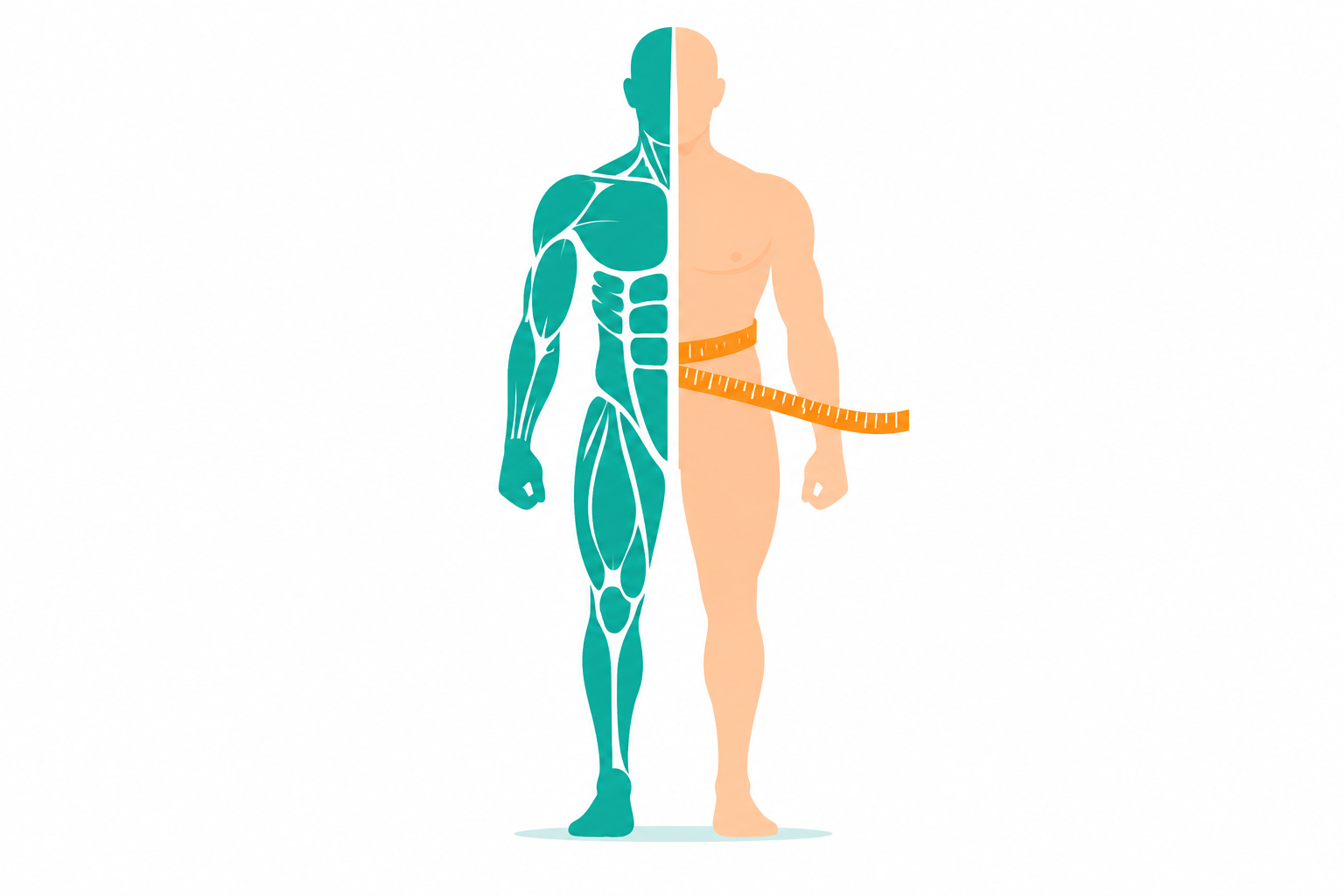
Two people can weigh exactly the same and look completely different — because weight alone says nothing about body composition. Body fat percentage fills that gap, telling you how much of your total weight is fat versus lean mass (muscle, bone, organs, water). It’s a far more meaningful health and fitness metric than the number on the scale, and more useful for tracking real progress than weight alone.
Why Body Fat Percentage Matters More Than BMI
BMI, as covered in our BMI calculator guide, can’t distinguish muscle from fat — a muscular athlete and a sedentary person of the same height and weight can have wildly different health profiles despite an identical BMI. Body fat percentage solves this blind spot directly, which is why the American Council on Exercise and most fitness professionals treat it as a more reliable composition metric for tracking real progress.
Methods to Measure Body Fat
- Skinfold calipers — pinches fat at specific body sites and estimates total body fat from the measurements; inexpensive but technique-dependent
- Bioelectrical Impedance Analysis (BIA) — used in many home scales and gym devices; sends a mild electrical current through the body and estimates fat based on resistance, though hydration levels can skew results
- DEXA scan — considered the clinical gold standard for body composition, but requires specialized equipment typically found at medical or research facilities
- US Navy Method — a tape-measure-based formula using waist, neck, height, and (for women) hip measurements; free, reasonably accurate, and easy to calculate at home
The US Navy Method: Formula and Real Example
Men: %Body Fat = 86.10 × log₁₀(waist − neck) − 70.041 × log₁₀(height) + 36.76
Women: %Body Fat = 163.205 × log₁₀(waist + hip − neck) − 97.684 × log₁₀(height) − 78.387
(All measurements in inches)
Example (male): Waist 34″, neck 15″, height 70″
- log₁₀(34 − 15) = log₁₀(19) = 1.2788
- 86.10 × 1.2788 = 110.10
- log₁₀(70) = 1.8451
- 70.041 × 1.8451 = 129.24
- %Body Fat = 110.10 − 129.24 + 36.76 = ~17.6%
That places this person solidly in the “fitness” category — lean and healthy without being at the extreme low end associated with essential-fat-only ranges.
Healthy Body Fat Ranges by Category
| Category | Men | Women |
|---|---|---|
| Essential fat | 2–5% | 10–13% |
| Athletes | 6–13% | 14–20% |
| Fitness | 14–17% | 21–24% |
| Acceptable | 18–24% | 25–31% |
| Obese | 25%+ | 32%+ |
Note that women naturally carry more essential fat than men, due to hormonal and reproductive biology — this isn’t a flaw in the measurement, it’s a genuine physiological difference, and the CDC’s guidance on healthy weight reflects this distinction in its broader recommendations.
How to Reduce Body Fat Safely
- Create a moderate calorie deficit (300–500 calories/day below maintenance) rather than an extreme one, which risks muscle loss alongside fat loss
- Prioritize protein intake to help preserve lean muscle mass during a deficit — Harvard Health’s guidance on protein and weight loss covers target ranges in more depth
- Incorporate resistance training, not just cardio, since maintaining or building muscle improves body composition more effectively than weight loss alone
- Be patient with the timeline — sustainable fat loss is typically 0.5–1% of body weight per week, meaning meaningful body fat percentage changes take months, not weeks
Common Mistakes When Tracking Body Fat
- Measuring too frequently — body fat percentage fluctuates with hydration and measurement technique day to day; weekly or biweekly tracking gives a more accurate trend
- Comparing yourself to fitness models or athletes — many visible “six-pack” physiques sit at body fat levels that are difficult and often unsustainable to maintain long-term for the average person
- Chasing an unrealistically low target — dropping below essential fat ranges carries real health risks, including hormonal disruption, particularly in women
- Ignoring measurement consistency — using different methods or measuring at different times of day between check-ins introduces noise that can mask real progress
Estimate your body fat percentage in seconds. Use the Body Fat Calculator →
Frequently Asked Questions
How accurate is the US Navy body fat method?
The Navy method is generally accurate within about 3–4% of more precise methods like DEXA scans for most body types, making it a reasonable free, at-home estimate, though it can be less precise for very muscular or very lean individuals.
What is a healthy body fat percentage for a woman?
For most adult women, 21–31% is generally considered a healthy range, spanning from the “fitness” category through “acceptable,” with athletes sometimes maintaining lower percentages depending on their sport and training demands.
What is a healthy body fat percentage for a man?
For most adult men, 14–24% is generally considered a healthy range, covering the “fitness” and “acceptable” categories, with competitive athletes sometimes maintaining lower percentages under close monitoring.
Can you lose body fat without losing weight?
Yes — this is common during body recomposition, where fat loss and muscle gain happen simultaneously, particularly for beginners to resistance training. The scale may stay flat or even rise slightly while body fat percentage still improves.
How often should I measure my body fat?
Every 2–4 weeks is generally sufficient to track meaningful trends, since day-to-day fluctuations from hydration, sodium intake, and measurement technique can obscure real progress if you check too frequently.
Is body fat percentage more important than weight?
For most health and fitness goals, yes — body fat percentage reflects body composition, which is more directly tied to health outcomes and physical performance than total weight alone, since it distinguishes fat mass from muscle and other lean tissue.