
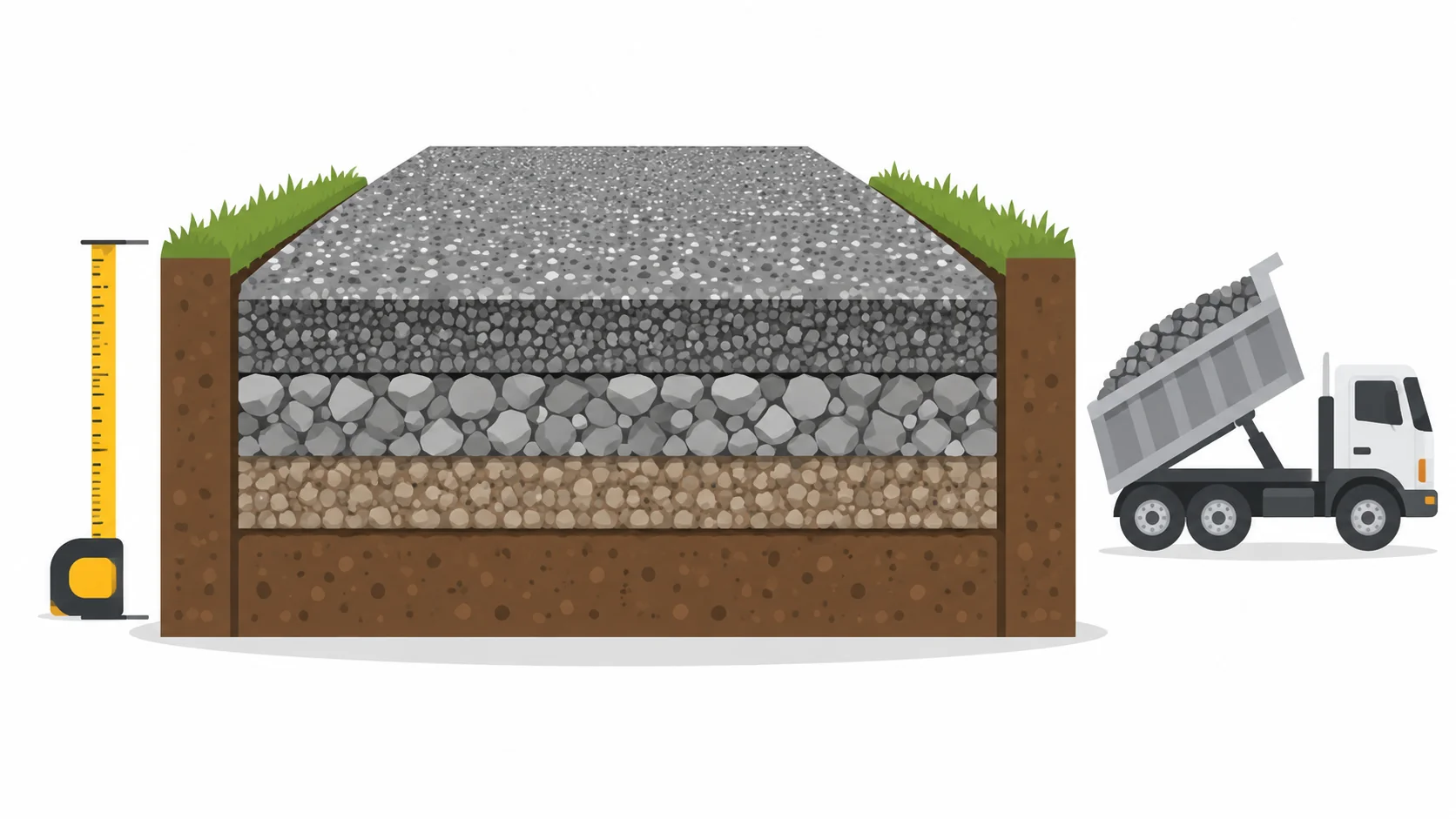
Gravel gets sold by weight, not by the simple area you’re covering, which trips up plenty of first-time DIYers. Ordering the right tonnage means converting your project’s dimensions into cubic yards first, then applying the correct density for your specific gravel type. Here’s exactly how.
The Gravel Volume Formula
Volume (cubic feet) = Length × Width × Depth (all in feet)
Cubic Yards = Cubic Feet ÷ 27
Tons Needed = Cubic Yards × Density (tons per cubic yard)
Real Example: 20ft × 10ft Driveway, 4 Inches Deep
Let’s calculate a full driveway project.
- Length: 20 ft
- Width: 10 ft
- Depth: 4 inches = 4 ÷ 12 = 0.333 ft
Volume: 20 × 10 × 0.333 = 66.67 cubic feet
Cubic yards: 66.67 ÷ 27 = 2.47 cubic yards
Using a typical crushed stone density of 1.4 tons per cubic yard:
Tons needed: 2.47 × 1.4 = 3.46 tons
Always Add a Waste Factor
Uneven ground and minor spillage during spreading mean the exact calculated amount rarely covers the job completely. Adding a 10% waste factor:
Adjusted tons: 3.46 × 1.10 = 3.80 tons
Running short partway through a project is far more disruptive than having a small surplus, since most suppliers sell gravel by the ton with minimum delivery quantities, making a follow-up order for a small shortfall inconvenient and often costly.
Gravel Density Varies by Type
Not all gravel weighs the same per cubic yard. Density depends on the specific material and how tightly it compacts:
| Gravel Type | Approximate Density (tons/cu yd) |
|---|---|
| Crushed stone (general) | 1.4 |
| Pea gravel | 1.3 |
| Crushed limestone | 1.35 |
| Decomposed granite | 1.5 |
| River rock | 1.3 |
The National Stone, Sand & Gravel Association’s material guidance covers these density variations in more detail, since choosing the wrong density figure for your specific gravel type can throw off the entire tonnage calculation.
Choosing the Right Depth for Your Project
Depth requirements vary significantly by application:
- Walkways: typically 2 inches
- Driveways (base layer): typically 4–6 inches
- Driveways (top layer only, over an existing base): typically 2 inches
- Drainage applications: often 4+ inches, depending on the specific drainage need
A driveway often needs multiple layers, a compacted base layer of larger stone followed by a finer top layer, which means calculating gravel needs separately for each layer rather than treating the whole depth as one uniform material.
Choosing the Right Gravel Type for the Job
- Crushed stone: angular pieces that lock together well, making it a strong choice for driveway base layers requiring stability
- Pea gravel: smooth, rounded stones that look attractive but shift more underfoot, better suited for walkways or decorative applications than heavy vehicle traffic
- Decomposed granite: compacts into a relatively firm surface, popular for pathways in landscaping projects
The Concrete Network’s guide to gravel driveway materials compares these options in more depth for specific project types.
Common Gravel Calculation Mistakes
- Using the wrong density figure for the specific gravel type being ordered
- Forgetting the waste factor, leading to a shortage that requires an inconvenient follow-up delivery
- Calculating only one layer for a multi-layer driveway project, understating the true total tonnage needed
- Confusing cubic yards with tons, since the two units require the specific density figure to convert correctly between them
Calculate exactly how much gravel you need. Use the Gravel Calculator →
Frequently Asked Questions
How much gravel do I need for a 20×10 driveway?
For a 20×10 driveway at 4 inches deep, you’d need approximately 3.46 tons of standard crushed stone before waste, or about 3.8 tons after adding a typical 10% waste factor.
How deep should gravel be for a driveway?
A driveway base layer typically needs 4–6 inches of gravel, while a top layer applied over an existing compacted base is often just 2 inches, so total depth depends on whether you’re building from scratch or refreshing an existing surface.
How do you convert cubic yards of gravel to tons?
Multiply the cubic yards by the specific density of your gravel type, typically between 1.3 and 1.5 tons per cubic yard depending on the material, since different gravel types compact and weigh differently per unit of volume.
What is the cheapest type of gravel for a driveway?
Crushed stone and recycled concrete aggregate are generally among the more affordable options for driveway base layers, though exact pricing varies significantly by region and local supplier availability.
Should I add extra gravel for waste?
Yes, adding a 10% waste factor to your calculated amount accounts for uneven ground and spillage during spreading, helping avoid an inconvenient shortage partway through the project.
Does gravel need a separate base layer?
For driveways, yes, typically. A compacted base layer of larger, angular crushed stone provides structural stability, with a finer top layer added afterward for a smoother finished surface, meaning total gravel needs often span two separate calculations.