
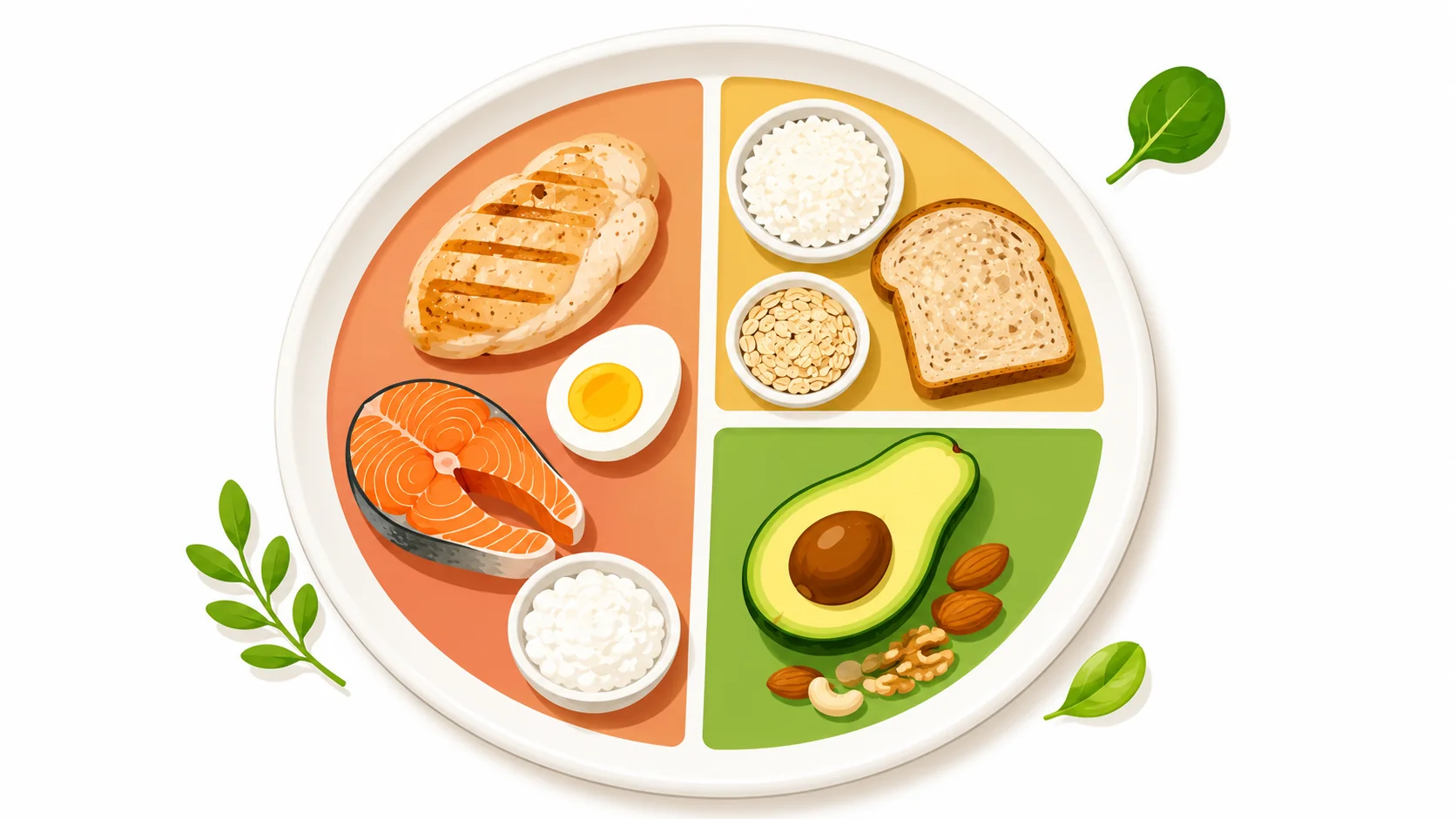
Calories tell you how much to eat. Macros tell you what to eat. Once you know your daily calorie target, breaking it into protein, carbs, and fat gives you a much clearer roadmap, especially if your goal is building muscle, losing fat, or simply eating in a more balanced way.
What Are Macronutrients?
Macronutrients, or “macros,” are the three nutrients that provide calories: protein, carbohydrates, and fat. Each one supplies a different number of calories per gram:
- Protein: 4 calories per gram
- Carbohydrates: 4 calories per gram
- Fat: 9 calories per gram
Fat carries more than double the calories per gram compared to protein or carbs. That’s why even small amounts of high-fat foods add up quickly in a daily calorie count.
How to Calculate Your Macros
Once you know your daily calorie target (from a TDEE calculator, for example), you split it into a percentage for each macro, then convert that percentage into grams.
Formula: (Calorie Target × Macro %) ÷ Calories per Gram = Grams of that Macro
Real Example: 2,500 Calories, 40/30/30 Split
Let’s use a common “40/30/30” split — 40% protein, 30% carbs, 30% fat — on a 2,500 calorie daily target.
Protein: 2,500 × 40% = 1,000 calories ÷ 4 = 250g
Carbs: 2,500 × 30% = 750 calories ÷ 4 = 187.5g
Fat: 2,500 × 30% = 750 calories ÷ 9 = ~83g
Add those calories back together (1,000 + 750 + 750 = 2,500), and they match the original target exactly, confirming the math checks out.
Common Macro Splits and When to Use Them
- Balanced (40/30/30 or similar): a well-rounded approach that works for general health and moderate body composition goals
- High protein (35–40% protein): often used during fat loss phases, since higher protein intake helps preserve muscle mass while in a calorie deficit
- Low carb (under 25% carbs): popular for certain metabolic health goals or personal preference, though not inherently superior for fat loss compared to other splits at the same calorie level
- Ketogenic (5–10% carbs, 70%+ fat): a specific medical and dietary approach requiring careful planning, distinct from simply “low carb” eating
No single split is universally “best.” The right ratio depends on your goals, training style, and what you can realistically stick with long-term.
Adjusting Macros for Your Specific Goal
- Fat loss: typically prioritizes higher protein (to preserve muscle) with a moderate calorie deficit, while carbs and fat can flex based on personal preference and training demands
- Muscle gain: needs sufficient protein plus enough total calories in a surplus, with carbs often emphasized around training sessions to fuel performance and recovery
- General health maintenance: benefits from a reasonably balanced split, without needing to optimize any single macro aggressively
The Academy of Nutrition and Dietetics recommends adjusting these ratios based on individual activity level and health goals rather than following a single fixed formula for everyone.
Practical Tips for Tracking Macros
- Weigh food when starting out — eyeballing portions is notoriously inaccurate, and a kitchen scale removes most of the guesswork
- Prioritize protein first when planning meals, then fill in carbs and fat around it, since protein targets are usually the hardest to hit consistently
- Don’t chase perfection daily — hitting your targets within a reasonable range most days matters more than exact precision every single day
- Reassess every few weeks as your weight and activity level change, since your ideal macro targets shift along with your overall calorie needs
Harvard Health’s guide to protein needs is a useful starting point if you’re unsure how much protein fits your specific activity level and goals.
CTA Block
Get your personalized macro breakdown in seconds. Use the Macro Calculator →
(Paste this as a Buttons block or a bold Paragraph block linking to the tool page.)
Frequently Asked Questions
What is the best macro split for weight loss?
There’s no single best split for everyone, but a higher-protein approach (around 35–40% of calories from protein) combined with a moderate calorie deficit tends to work well for preserving muscle mass while losing fat.
How much protein do I need per day?
General guidelines suggest 0.7–1 gram of protein per pound of body weight for active individuals, though this can shift higher during a fat loss phase or for those doing significant resistance training.
Are carbs bad for weight loss?
No. Carbohydrates aren’t inherently bad for weight loss — total calorie balance matters most. Some people find lower-carb approaches easier to stick with, but it’s a personal preference rather than a metabolic requirement for fat loss.
What macro split is best for building muscle?
A split emphasizing sufficient protein (around 30–35% of calories) alongside adequate carbs to fuel training, combined with a modest calorie surplus, generally supports muscle growth most effectively.
Do I need to track macros exactly every day?
Not necessarily. Many people get excellent results tracking loosely or within a reasonable range most days, rather than hitting exact gram targets every single day. Consistency over time matters more than daily precision.
How many calories are in a gram of fat versus protein?
Fat provides 9 calories per gram, more than double the 4 calories per gram found in both protein and carbohydrates, which is why fat-heavy foods add calories quickly even in small portions.